
Water Treatment
Water treatment is the process of improving the quality of water by removing or reducing undesirable substances to make it suitable for specific uses. The goal is to transform water with unpleasant or unsafe characteristics into water that is clean, safe, and acceptable for various purposes, including drinking, cooking, bathing, and washing.
Although many people think of water as just the clear liquid they use daily, it is a unique chemical compound made up of two natural elements—hydrogen and oxygen (H₂O). Despite its seemingly simple appearance, water is rarely found in its pure form in nature. Covering over 70% of the Earth’s surface, water exists in various environments and often contains a mix of impurities. These impurities can come from natural sources or result from human activities, making water treatment essential for ensuring its safety and usability.
Why Do We Need Water, and Why Must It Be Treated?
Water, like every other natural resource, derives its value from its importance to humans and other living organisms. The human body is made up of approximately 50–70% water, and this fluid is vital for regulating body functions, facilitating the smooth circulation of fluids, and flushing out toxins that could negatively affect our health.
Beyond hydration, water also contains essential minerals that support the proper functioning of the body. However, as human society advances and industrialization increases, our activities begin to impact the natural environment—especially water sources. The quality of water changes over time; the water we used a year ago may not be the same today. In the past, people could safely drink, bathe, and swim in streams and rivers, but over the years, many of these natural sources have become contaminated, leading to the outbreak of waterborne diseases.
Given water’s vital role, why is it necessary to treat it?
Water found outside of a controlled environment often contains a variety of impurities—both soluble and insoluble. While physical filtration can remove visible particles (insoluble substances), chemical treatment is required to eliminate dissolved contaminants. These soluble impurities often result from industrial waste, agricultural runoff, or natural mineral deposits and require specialized treatment processes.
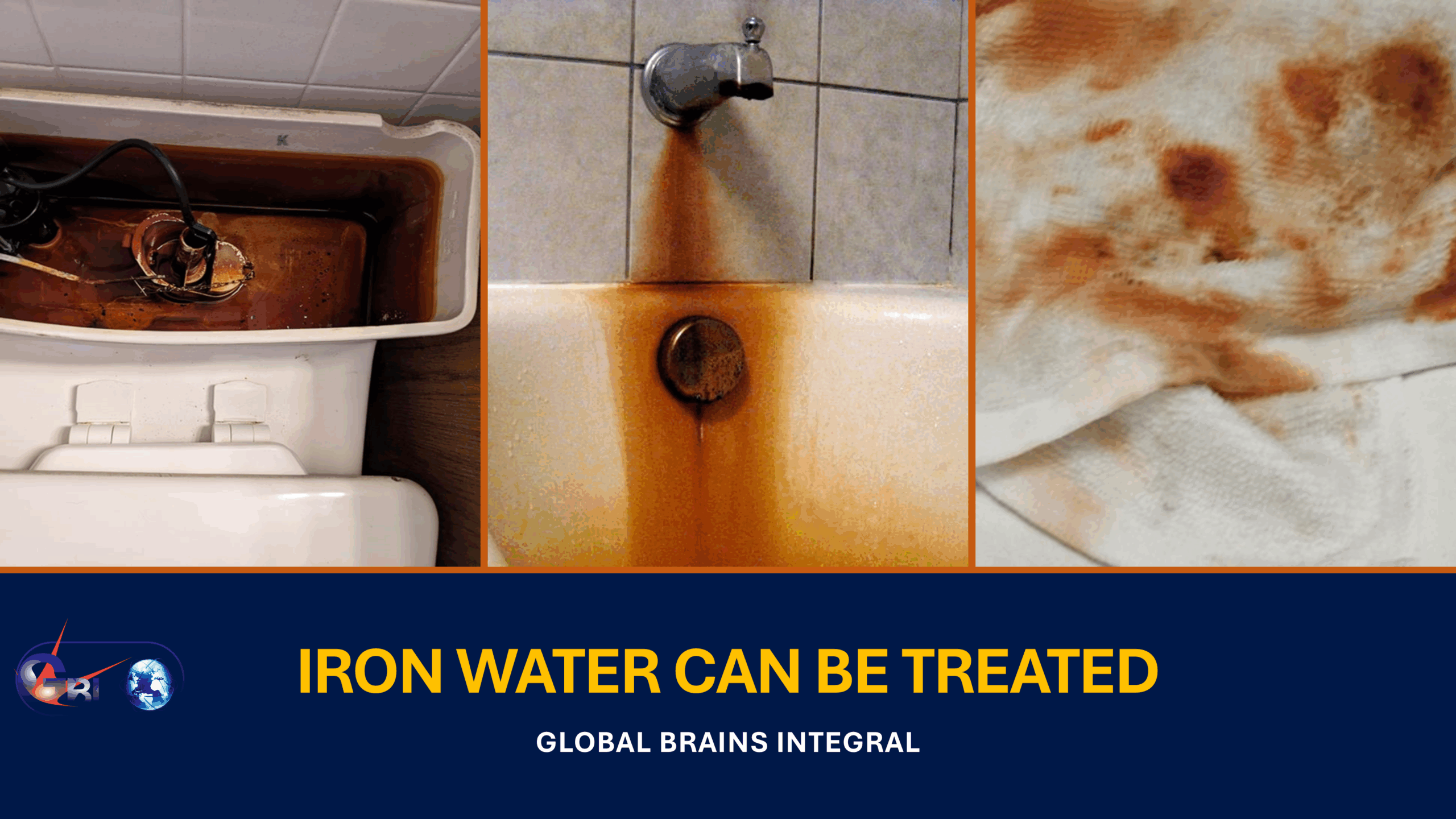
Without proper treatment, contaminated water can lead to serious health issues, including the spread of diseases. Additionally, untreated water rich in minerals like iron or manganese can cause unpleasant stains on clothes, plumbing fixtures, and even affect the taste and appearance of water.
In conclusion, water is essential to life, but to ensure it is safe and effective for use, especially for drinking and hygiene, proper treatment is not just beneficial—it is necessary.
When should I treat my water?
- Water treatment is necessary in various situations to ensure it is safe and suitable for use. You should treat your water when:
- You intend to drink it or use it for cooking: Consumption requires the highest level of purity to avoid health risks.
- The water causes stains in your home: Discoloration on sinks, toilets, or laundry can be a sign of excess minerals like iron or manganese.
- It has an unpleasant taste or odour: These are common indicators of contamination or the presence of dissolved substances.
- Its source is near a sewage plant or septic tank: Proximity to waste systems increases the risk of bacterial or chemical contamination.
- It is located near an industrial area: Factories may discharge waste or effluents into nearby water bodies, introducing harmful pollutants.
- There are nearby agricultural or agro-based industries: Runoff from farms can carry pesticides, fertilizers, and animal waste into the water supply.
- When in doubt, treat your water. It’s better to be safe than risk exposure to harmful contaminants.
What is Iron-Rich Water and Why Is It a Concern?
Iron-rich water refers to water that contains iron impurities beyond the acceptable limit, typically above 0.3 mg/L (not g/ml, which would be far too high). These impurities are classified as chemical contaminants, often in the form of soluble iron (II) salts. When exposed to oxygen, these salts undergo a redox reaction that converts iron (II) to iron (III), leading to the formation of orange-brown precipitates. This process is responsible for the rust-colored stains commonly found on kitchenware, bathroom fixtures, laundry, and surfaces that come in contact with such water. Additionally, iron-rich water often has a metallic taste that can make it unpleasant to drink or cook with.
In Nigeria, many households face this challenge—often after investing large sums of money to drill boreholes. In some cases, multiple boreholes are dug, yet the problem persists. This occurs because once the borehole penetrates an iron-rich layer of the earth’s bedrock, iron-laden water begins to mix with cleaner water sources. Even after the borehole is completed, the contamination remains.
One way to minimize this is to adopt well casing methods similar to those used in the oil and gas industry. In this process, every drilled section is sealed with a concrete casing before proceeding to the next, helping to isolate cleaner water layers. While this doesn’t entirely eliminate the risk of iron infiltration, it can significantly reduce it.
However, the most cost-effective and reliable solution remains treating the water itself. Instead of continuously drilling new boreholes—an approach that is expensive and potentially harmful to the environment—it’s better to install a proper water treatment system designed to remove iron. This not only saves money but also prevents future geological issues that could arise from excessive drilling.
Steps to Address Iron-Contaminated Water
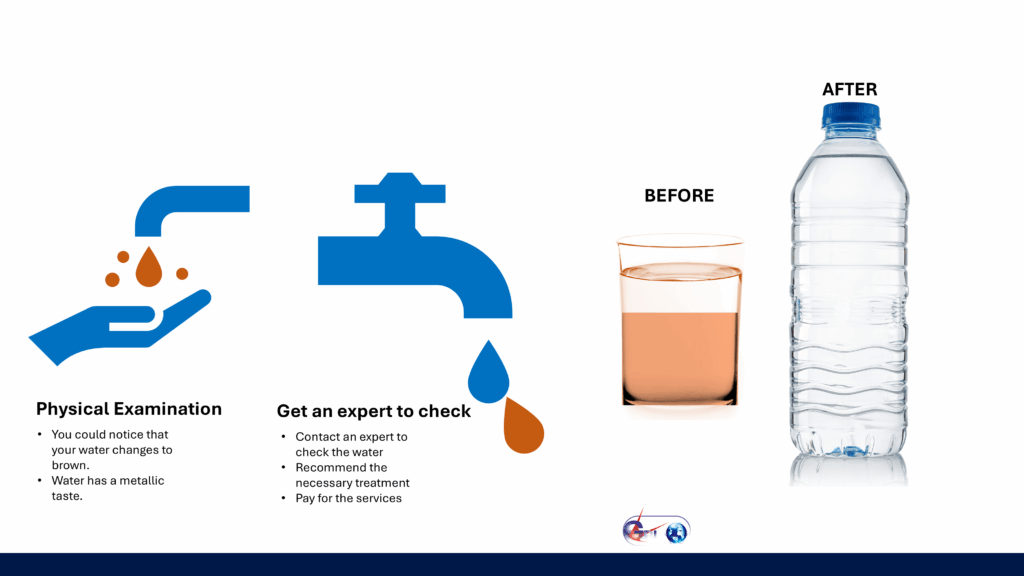
- Physically Identify Signs of Iron in Water
Look out for common indicators such as:- Reddish-brown or orange stains on sinks, toilets, and laundry
- Metallic taste in drinking water
- Discoloration in standing water
- Clogging or buildup in pipes and appliances
- Consult a Water Treatment Specialist
If you suspect iron contamination, the next step is to have your water professionally tested. A specialist can:- Determine the type and concentration of iron present (ferrous or ferric)
- Assess other possible contaminants
- Recommend appropriate treatment methods
- Follow Through with Treatment if Needed
Based on the test results, proceed with the recommended treatment option. Common methods include:- Oxidation and filtration systems
- Water softeners with iron filters
- Chemical treatment (e.g., chlorination)
Water Treatment Solutions by Global Brains Integral
At Global Brains Integral, we offer a wide range of water treatment solutions tailored to meet both residential and industrial needs. Our services include, but are not limited to:
- Iron Water Treatment
Effective removal of iron and related stains, ensuring clean, odor-free water for everyday use. - Whole House Water Treatment Systems
Comprehensive solutions that deliver safe, treated water to every tap in your home. - Industrial Water Treatment & Management
Customized systems for factories, plants, and agro-based industries to ensure compliance, efficiency, and sustainability. - Water Treatment Consultation for Businesses
Expert guidance and system design to help organisations develop and maintain optimal water treatment processes.
Why Choose Global Brains Integral?
We don’t just treat water, but we provide lasting solutions. Here’s why clients trust us:
- Expert Iron Water Treatment
We specialize in eliminating iron contamination, restoring water clarity, taste, and safety. - Reliable, Long-Term Solutions
Our services are designed to address the root cause of water problems—not just the symptoms—ensuring lasting results. - Cost-Effective Services
We deliver high-quality treatment systems that offer maximum value, helping you save on future repairs and replacements. - Ongoing Support & Monitoring
We maintain consistent contact with our clients, offering routine checks to ensure your system continues to operate at peak performance. - Customized Systems for Every Need
Whether it’s a private residence or a large-scale industrial setup, we tailor each solution to fit your unique requirements. - Trusted by Homes and Businesses Alike
Our growing client base speaks to our commitment, quality, and integrity.
Treat your water today—contact us to get started with a solution that works for you.

